BREAKING NEWS
Showing posts with label News. Show all posts

Tuesday, 25 July 2017

Nokia 8 to be launched on August 16

Finally, the launch date for the much awaited flagship phone by Nokia has been revealed. HMD Global who is now producing the phones with Nokia branding has started sending invites for an event in London, slotted for 16 August.
The Verge reported that the event marks the launch of Nokia 8 flagship phone with a Carl Zeiss camera. Previously, Nokia has used the lenses in phones like Nokia 808. Last week, VentureBeat reported the leaked images of Nokia 8 along with the rumored specifications.
According to the reported specifications, the phone will rock a Qualcomm Snapdragon 835 processor with 4 or 6 GB of RAM. It will have a 5.3-inch QHD display. The dual camera on the rear will be a pair of 13 MP lenses. The internal storage will be of 64 GB. And the phone will have dual SIM capacity. It will run on Android Nougat 7.1.1 out of the box.
There is no clarity on the availability of the phone in India. The company launched its budget to mid-range models Nokia 3, Nokia 5 and Nokia 6 in the country in June.

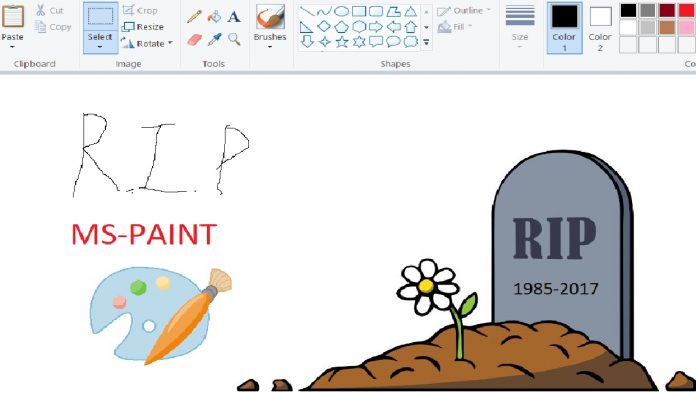
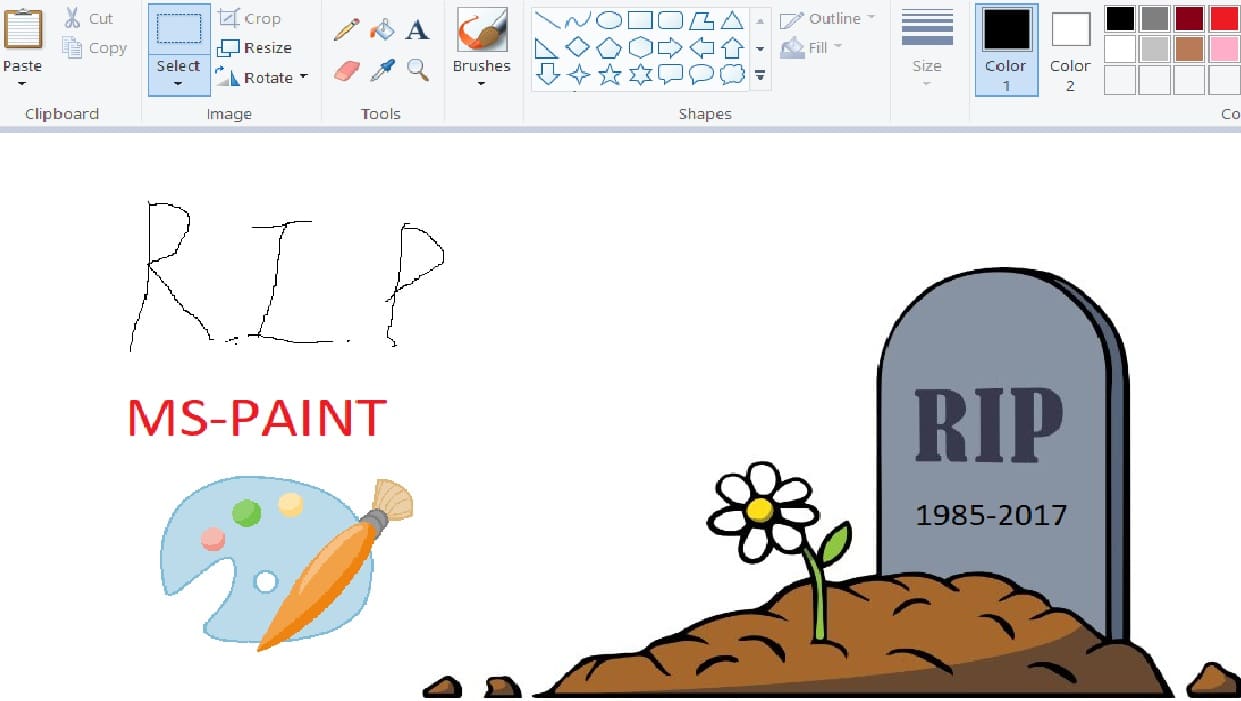
RIP MS PAINT: Microsoft Is Killing MS Paint After 32 Years


32 years of MS Paint Era Ends


Microsoft’s next new Windows 10 update named the Autumn Creators Update has a variety of new features. Microsoft will be removing Microsoft Paint in the new update. MS Paint was first released in the very first version of Windows 1.0 in 1985. MS Paint in its various appearances was one of the first graphics editors used by many, and it became a crucial software of Windows.

If you remember beginning as a 1-bit monochrome licensed version of ZSoft’s PC Paintbrush, it wasn’t until Windows 98 that Paint could save in JPEG. But now with the Windows 10 Creators Update, released in April, Microsoft introduced an interesting software named Paint 3D replacing MS Paint.

The Paint 3D image making tools have some basic 2D image editing options. Paint 3D is not an update to the MS Paint. Microsoft has completely removed the Paint and replaced with Paint 3D. Besides MS Paint Microsoft has removed Outlook Express, Reading list, and Reader app. These software has been signaled for an end having been added to the “features that are removed or deprecated in Windows 10 Fall Creators Update” list.

The paint was one of the best memory it ever gave to all the 90’s kids. But it had cons back then; Paint was limited to the bitmap and PCX formats until 1998. Don’t forget if we wanted to scribble something out quick and paste job; MS Paint was always there.

The recent version of MS Paint for Windows 7 and later versions were improved but still was poor when compared to other free alternative software such as Paint.NET. The Microsoft Paint date when it will be officially removed from Windows has yet to be confirmed(changes from country to country).

The precise date for the release of the Windows 10 Autumn Creators Update is up in the air. Windows users of 90’s will celebrate or decry Paint’s removal, it will be a moment in the history of Windows as one of its longest-standing apps is put out to pasture.

Planning to apply for a passport? Here are some changes in rules that you need to know

The Ministry of External Affair, which handles the issuing of passports in India, released new passport rules in December 2016. Few changes have followed afterwards as well. We look at all the significant changes enforced in recent months.
The changes in passport rules over the past year has made it easier for Indian applicants to obtain a passport.

The government has made a number of changes in passport rules over the past year with the objective of making registration of passports easier. The Ministry of External Affair, which handles the issuing of passports in India, released new passport rules in December 2016. Few changes have followed afterwards as well. We look at all the significant changes enforced in recent months.

1. Birth certificate requirement waived off: Prior to the enforcement of new passport rules, individuals had to submit their birth certificate if they wished to obtain a passport. The process of enrollment was not completed if it wasn’t submitted. The rule applied to applicants who were born on or before January 1, 1989.

The requirement has now been waived off and the document made an option for registration. Applicants can now submit either of the following documents as proof of date of birth: Birth certificate; Aadhaar; PAN card with date of birth (DoB); transfer/school leaving/matriculation certificate with DoB. It also allows a copy of the extract of the service record of the applicant (only for government servants) or the Pay Pension Order (only for retired government servants. One could also submit driver’s licence, election photo identity card or policy bond issued by public life insurance corporations with applicant’s DOB.

2. Name of only one parent/legal guardian will do: The government now allows the applicant to fill details of only one parent or legal guardian if they choose to do so. This especially helps single parents who wish to obtain passports for their children. It is also not mandatory now to mention the father’s name in the application. The long demanded decision was taken after a special committee examined the issues that related to children with single parents and adopted children.

3. Fewer annexes: The number of annexes has also been reduced from 15 to 9. Annexes A, C, D, E, J, and K have been removed and provisions of some have been merged. You don’t need to get the annexures attested now as well. Previously, there was a requirement to get them attested from a notary/first class judicial magistrate/executive magistrate. All that you need to do is self-attest the document on plain paper instead of a stamp paper.

4. Marriage certificate and divorce decrees not mandatory: Married applicants would not be required to provide the erstwhile Annexure K or any marriage certificate. Now, the applicants also do not have to submit the marriage certificate or divorce decree if they are separated or divorced. This was required earlier. The applicant also doesn’t need to mention the name of the former spouse in the application.

5. Easier for orphaned children and children born out of wedlock: If an orphaned child is without a proof of DoB like matriculation certificate or a court order, the head of the orphanage or child care home can write a declaration for the child on the organisation’s official letterhead and that can be submitted with the application.
If a child is born out of wedlock, the applicant can submit the extant Annexure C while submitting the passport application.

6. No NoC needed from superiors for government servants: Earlier, government servants could not get a passport without an Annexure B or no objection certificate (Annexure M) obtained from their superior officials. If the person, now, is in dire need of a passport and can’t wait to obtain the certificate, a self-declaration on Annexure N can be submitted at the time of application. Annexure N will state that the person has given prior intimation to their employer that they are applying for an ordinary passport.

7. Deed waived for in-country adoption: While applying for passport of in-country domestically adopted children, one need not submit the registered adoption deed. One can simply, in the absence of a deed to this effect, can simply submit a declaration written and signed on a plain paper that confirms the adoption of the child.

8. Aadhaar mandatory: The government has now made it mandatory for an applicant to furnish the details of his/her Aadhaar and UID number while applying for a passport. The person will now also have to make an in-person appearance for obtaining the passport after the biometric verifications are done and the officials are convinced that there is no impersonation involved. Earlier, passports were delivered to an applicant’s home via registered post.

Monday, 24 July 2017

How much Ram does a smartphone actually need?


Buying a smartphone today can be confusing. Long specification sheets are crammed with numbers, and their relationship with real-world performance is not always clear. One of the most misunderstood of all those specs is RAM, or Random Access Memory.

If you’re wondering how much RAM your smartphone needs, then you’re not alone. This question has popped up again and again since the dawn of the smartphone. We decided to ask some experts about how much RAM the average person really needs, what it does, and how it works.

WHAT DOES RAM DO?

“Smartphones have come a long way in the last few years and do more for us now than ever,” Vishal Kara, Head of Product at Piriform(the makers of CCleaner for Android) told Digital Trends. “As we perform more and more tasks using our smartphones, more RAM is necessary for them to continue functioning efficiently.”

We install apps and games into internal storage, our CPU (Central Processing Unit) and GPU (Graphics Processing Unit) deal with processing, so what does RAM do?

“Smartphones require instant access memory for multitasking – which is what RAM delivers,” Kara said. “Essentially, RAM keeps all your operations running at once.”

“There is no right or wrong to how much RAM a smartphone requires"

When you run an app or game on your phone, it’s loaded into RAM. As long as an app is still in RAM, you can jump back into it where you left off without loading it afresh. This is why RAM is important for multitasking. The loaded apps stay there until your RAM fills up and needs to flush something to make room for something else.

In theory, more RAM means that you can have more processes and therefore more apps running at once.

“There is no right or wrong to how much RAM a smartphone requires, although RAM plays a big part in how fluid and seamless our smartphone experience is,” explains Kara. “Unlike PCs, where a few seconds delay in an app loading is acceptable, we expect apps to load instantly on our smartphones even when we’re on the go.”

RAM also enables processes to run in the background. Some of these background processes, such as your phone checking for email, are really useful. Others, like a piece of carrier bloatware or an app that you never use, are not.

THE RISE OF RAM

The first Android smartphone, the T-Mobile G1 or HTC Dream, had just 192MB of RAM and the original iPhone got by with 128MB of RAM. Those numbers have climbed steadily over the last decade or so, with an occasional leap prompting a new round of discussion. OnePlus most recently reignited the debate with the OnePlus 5, which boasts 8GB of RAM.

“With 8GB of RAM, the OnePlus 5 can run more apps in the background allowing for faster multitasking, and, with the unrelenting development of innovative applications and technologies, the demand for more power and memory in smartphones is ever-increasing,” Laura Watts, European communications manager for OnePlus, told Digital Trends in an email. “With 8GB of RAM, the OnePlus 5 allows all users to easily run the most powerful applications and eliminates all doubt in its ability to do so in the future.”

OnePlus 5: 8GB of RAM

Julian Chokkattu/Digital Trends

Since most of the rest of the flagship smartphone pack is around the 4GB RAM mark right now, the jump to 8GB seems dramatic.

“Generally speaking, more RAM is better, and performance isn’t hampered by having more RAM,” John Poole of Primate Labs (makers of benchmarking software Geekbench 4 for iOSand Android) explained to Digital Trends. “But is it really necessary?”

The amount of RAM we need is certainly growing. The average smartphone user launches 9 apps per day and uses around 30 different apps in a month, according to App Annie. Digging into the memory tab in the settings of my HTC U11, which has 4GB of RAM, reveals that average memory use over the last day was 2.3GB and that 47 apps used memory during that period.

We also have more storage than ever. The OnePlus 5 with 8GB of RAM has 128GB of storage. That’s enough space for a lot of apps.

Poole also points to the fact that software is growing bigger and more complicated, cameras are shooting larger images in RAW format and performing more image processing, and screens are getting bigger, but he’s still skeptical about the need for 8GB.

“For smartphones, 4GB is plenty right now,” Poole said. “My feeling is that some vendors will engage in a specifications war where they’ll overprovision the amount of RAM simply because it’s a selling point -- they can say ‘look at how much more RAM our phone has than our competitors’ phone, clearly our phone is better’.”

It’s a sentiment that was shared by Huawei executive, Lao Shi, earlier this year.

WHY HAVING MORE RAM ISN'T ALWAYS BETTER

If RAM offers potential performance improvements and greater convenience, then you may be wondering: what’s wrong with having more of it?

If you aren’t using the RAM, then it may be a drain on your battery.

“The more RAM you put into a phone, the more power that will draw and the shorter your battery life will be,” Poole said. “RAM takes up the same amount of power regardless of what’s in it -- if it’s an application or it’s just free, you’re still paying for it in terms of power.”

In other words, if you aren’t using the RAM, then it may be an unnecessary drain on your battery. Those background processes that we mentioned earlier also have an associated cost, as anyone who has used the Facebook app on Android will know.

“Even if they’re not doing much, they can cause the processor to spin up to service any work that they have to do and that can contribute to energy drain,” Poole said.

THE IPHONE IN THE ROOM

Android phones have jumped from 2GB to 4GB RAM as standard, and we’re now seeing phones with 6GB and 8GB of RAM -- Apple’s iPhone has always gotten by with less.

Apple executives have traditionally remained tight-lipped about how much RAM is in the iPhone -- it’s not a spec they talk about. But we know from teardowns that the iPhone 7 has 2GB of RAM, and even the current top-of-the-range iPhone 7 Plus manages with 3GB of RAM.

iPhone 7: 2GB of RAM

Apple achieves comparable performance with less RAM because of fundamental differences in how the iOS and Android platforms handle memory management. Android relies upon something called garbage collection, while iOS takes a reference counting approach. A brief web search will reveal that the debate on which is better rages on, but it seems to be generally accepted that garbage collection requires more memory to avoid performance problems.

They may be different, but both platforms have a system of memory management that dictates what the RAM does. Because of this, you may not actually see any performance boost by simply adding more RAM – you would have to also tweak the memory management rules to take advantage of it. To what degree manufacturers are actually doing this is unclear.

Apple and Huawei did not respond to requests for comment. LG and HTC did not wish to participate in this article.

FREE THE RAM

“Users have been conditioned to believe that free RAM is an indicator of good performance from the days of PCs with limited memory, where this was a reasonable belief,” Kara said. “Nowadays, with more memory available, the perception that free RAM is an indicator of performance is a misconception. In fact, for a smartphone it’s the opposite.”

This misconception that having free RAM is a positive thing persists. Also, if you’re in the habit of clearing away your open apps, you should probably stop doing it because it isn’t helping. It won’t save battery life or make your phone run any faster, in fact, it can have the opposite effect.

“The operation of loading an app from storage into memory requires a lot of processing power, which results in higher power consumption,” Kara said.

Most manufacturers still provide utilities that allow you to review RAM and sometimes to free it up and close processes. Third-party task killer apps were also big for a while, but Poole describes them as “snake oil.”

“People want to see their RAM free, viewing it as headroom to work in,” says Poole. “But it’s better if your RAM is being used.”

Ultimately, how much RAM your smartphone needs depends on how you use your smartphone, but it’s no longer the problem it once was. Maybe a few power users will be able to feel the benefit of 6GB, and you might argue that 8GB is future-proofing. But anything over 4GB is probably overkill for the vast majority of people today.

VIEW ORIGINAL ARTICLE

India overtakes the USA to become Facebook’s #1 country


The latest figures that Facebook is reporting to advertisers indicate that India has overtaken the United States to become the platform’s largest country audience.

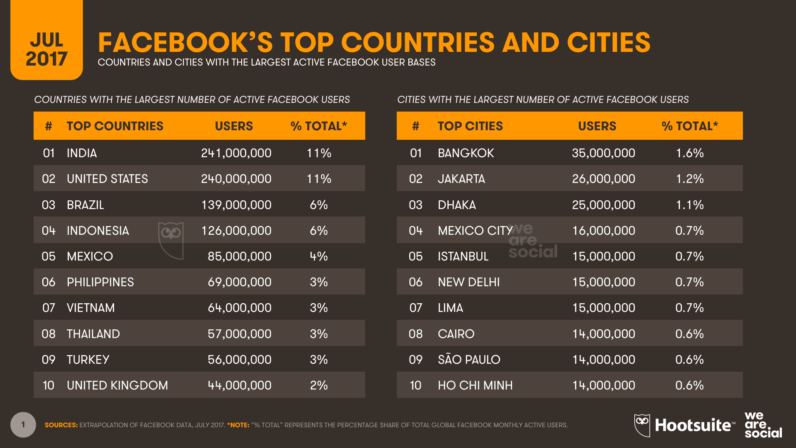
As of July 13th, Facebook is reporting a total “potential audience” of 241 million active users in India, compared to 240 million in the United States.

The change at the top of the platform’s country rankings comes just a few days after Facebook announced it has more than two billion monthly users around the world.

Facebook has achieved impressive growth in both countries since the start of 2017, but these new figures suggest that active users in India are growing more than twice as fast as they are in the United States.
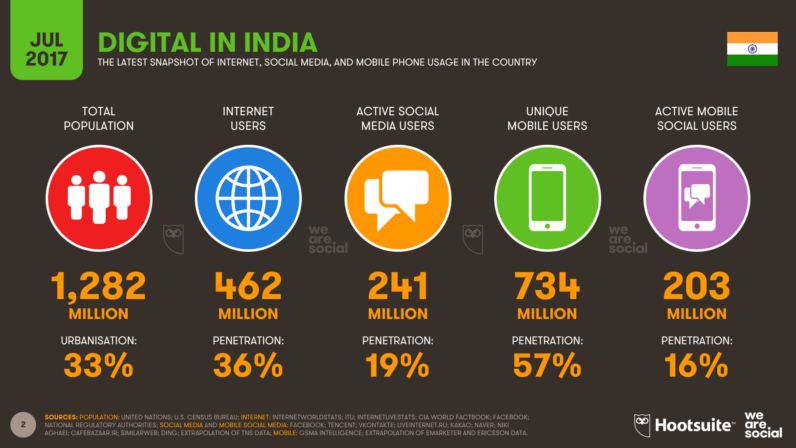
Active users in India are up 27 percent in the past six months alone (+50 million), compared to growth of 12 percent (+26 million) in the United States over the same period.

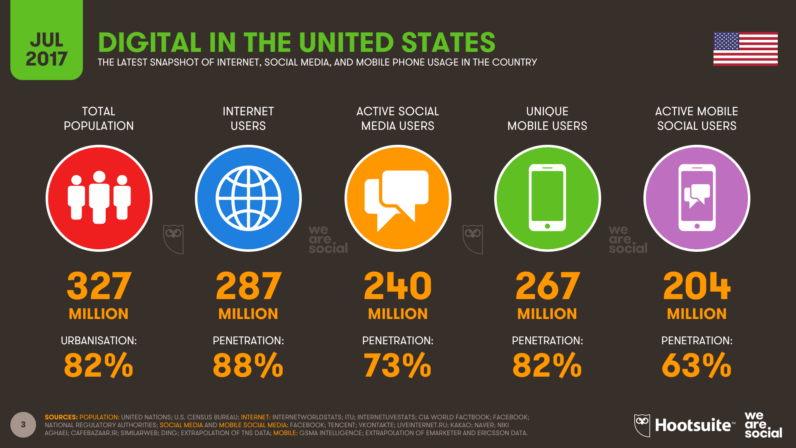
Despite these strong gains, social media penetration in India remains relatively low, with just 19 percent of the country’s total population using Facebook in the past month. That compares to 73 percent penetration in the United States, and a global average of around 42 percent.
It’s worth noting that the numbers Facebook reports to advertisers can change on a daily basis though, and the platform even reported a slight dip in global user numbers just before it announced its two billion active user milestone.

I’ve also noticed a few discrepancies in the numbers that Facebook reports for the same audiences across different parts of its advertising tool too, and some of these numbers don’t always make sense when compared to real-world populations either.

Despite these caveats, I’ve been tracking active user numbers for the United States and India for a few months now, and this change at the top of the country rankings is consistent with growth trends for the past six months.

Audience imbalance

Sadly, these rapid gains have done little to address the gender imbalance in India’s Facebook audience, and the ratio hasn’t improved since our Global Digital report in January

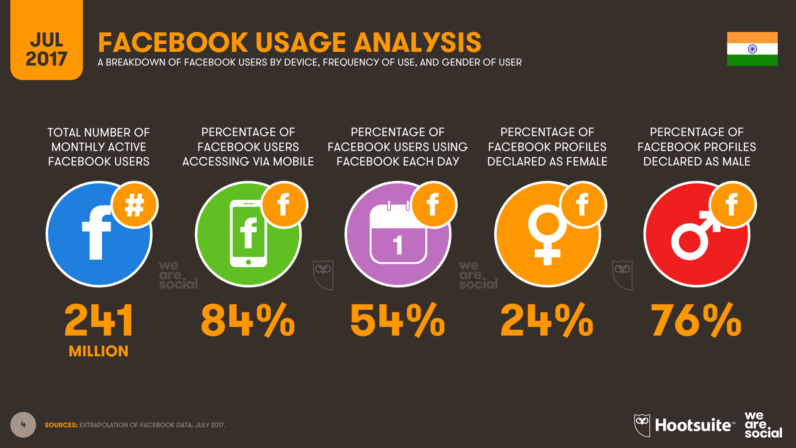
Men still represent three-quarters of the country’s active Facebook profiles, although it’s worth noting that this represents reported gender – a topic we explored in more detail in this piece on Facebook’s demographics a few weeks ago.

Facebook’s gender imbalance in India is in stark contrast to its US audience, where 54 percent of the platform’s active users are women.
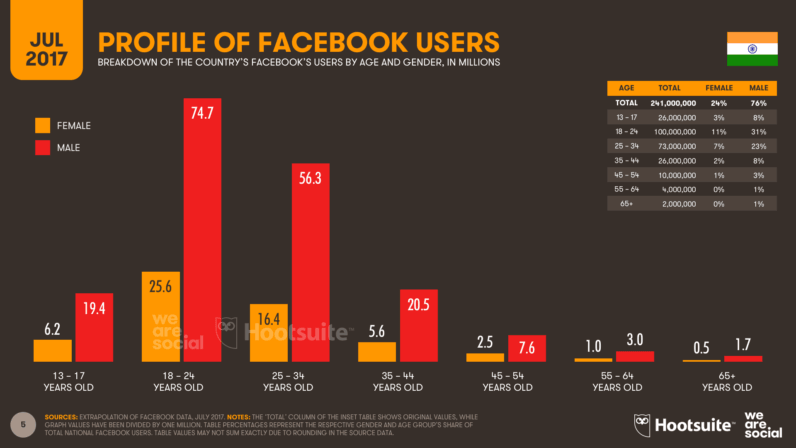
Facebook’s active users in India also skew young, with more than half of the country’s users below the age of 25.

As the penetration of internet-connected smartphones continues to grow in India, it’s likely that we’ll see these discrepancies start to even out, but there’s still lots of work to do to ensure that everyone in the country can benefit from the advantages of the connected age.
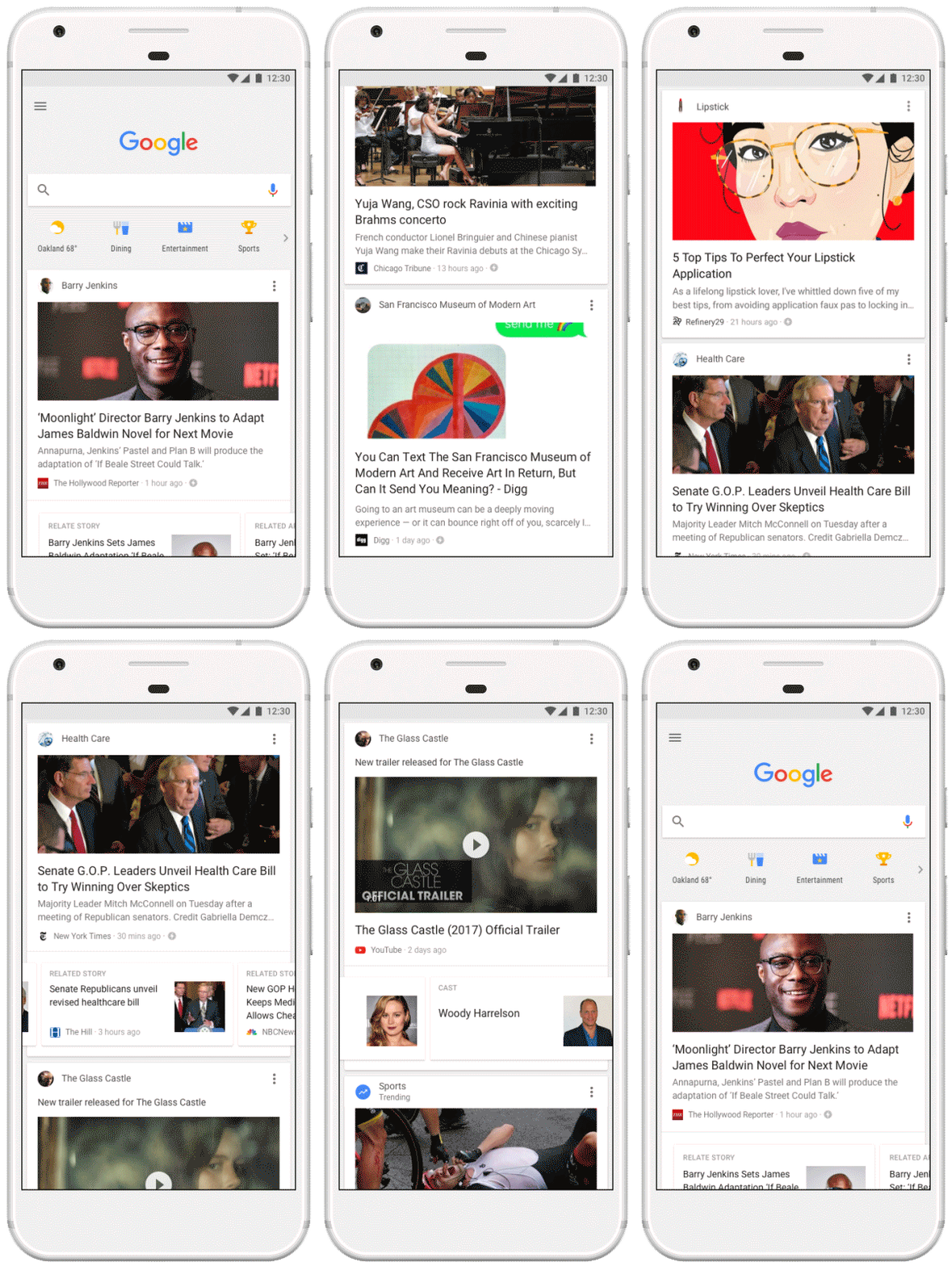
Google app is getting smarter, more personalized feed , machine learning.

As the late, great Dr Seuss once said, “there is no one alive who is you-er than you.” At Google, we know this statement is truer than true. Sure, we all have many things in common, but none of us has quite the same mix of passions, interests and goals as the next person. And, while we each keep up to date on the things that matter to us in different ways—social media, news apps, talking to friends—it’s hard to find one place to stay in the know about exactly what matters to you. Today that’s changing.

People have long turned to Google to get answers, learn about the world, and dig deeper on topics they’re passionate about. Today, we are announcing a new feed experience in the Google app, making it easier than ever to discover, explore and stay connected to what matters to you—even when you don’t have a query in mind.

A smart feed that changes with you

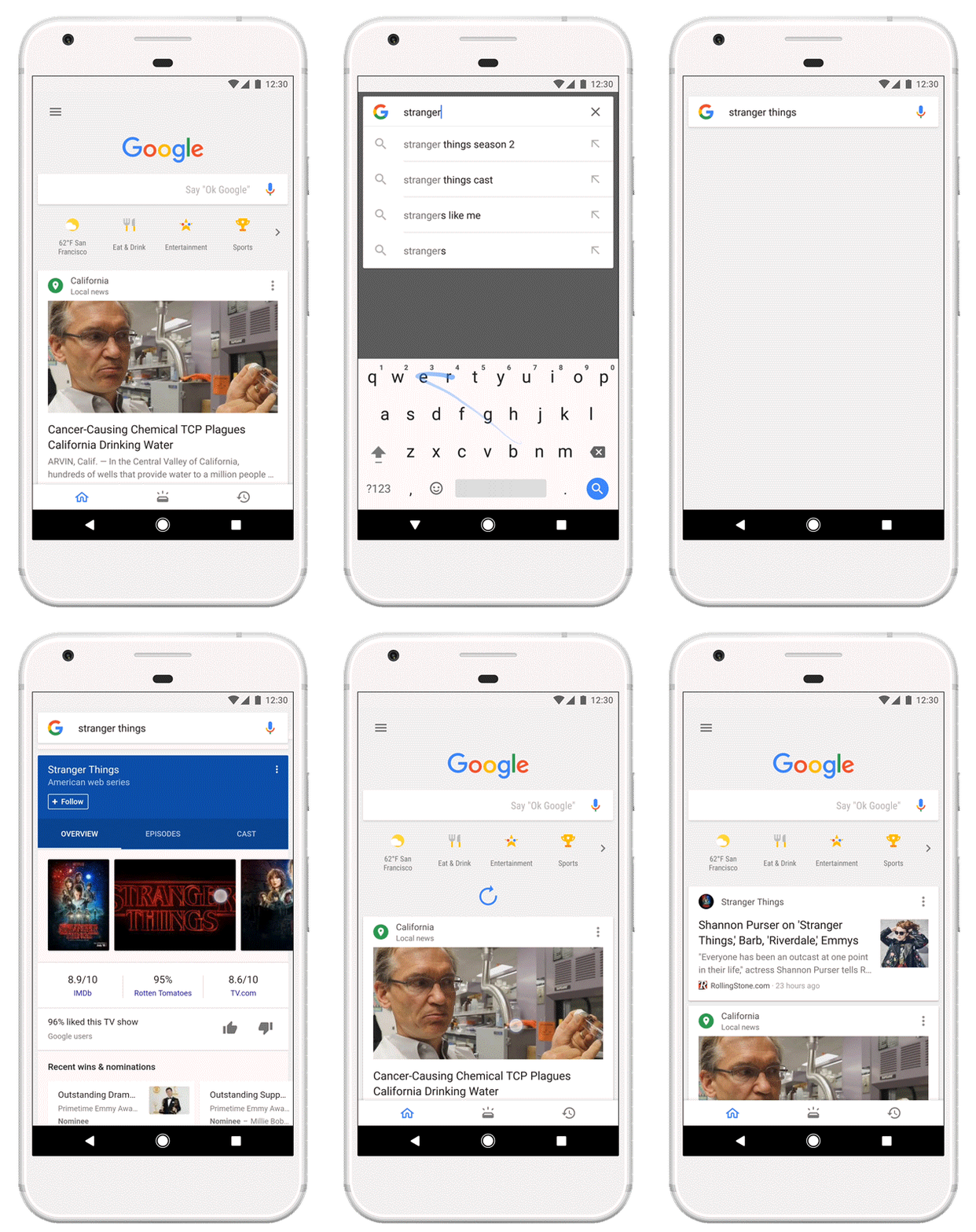
Since introducing the feed in December, we’ve advanced our machine learning algorithms to better anticipate what’s interesting and important to you. You’ll see cards with things like sports highlights, top news, engaging videos, new music, stories to read and more. And now, your feed will not only be based on your interactions with Google, but also factor in what’s trending in your area and around the world. The more you use Google, the better your feed will be.

As the world and your interests change, your feed will continue to grow and evolve along with you. You’ll notice that your feed will also reflect your interest level for various topics—for example, if you’re a photography enthusiast but just casually interested in fitness, your feed will show that. But if you see something that isn’t up your alley, unfollowing topics is easy too. Just tap on a given card in your feed or visit your Google app settings.

Follow your favorites

While we’ve been getting better at understanding your interests, it hasn’t always been easy for you to choose new topics for your feed. To help you keep up with exactly what you care about, you’ll now be able to follow topics, right from Search results. Look out for a new “Follow” button next to certain types of search results—including movies, sports teams, your favorite bands or music artists, famous people, and more. A quick tap of the the follow button and you’ll start getting updates and stories about that topic in your feed.

Broader context and deeper exploration

To provide information from diverse perspectives, news stories may have multiple viewpoints from a variety of sources, as well as other related information and articles. And when available, you’ll be able to fact check and see other relevant information to help get a more holistic understanding about the topics in your feed.

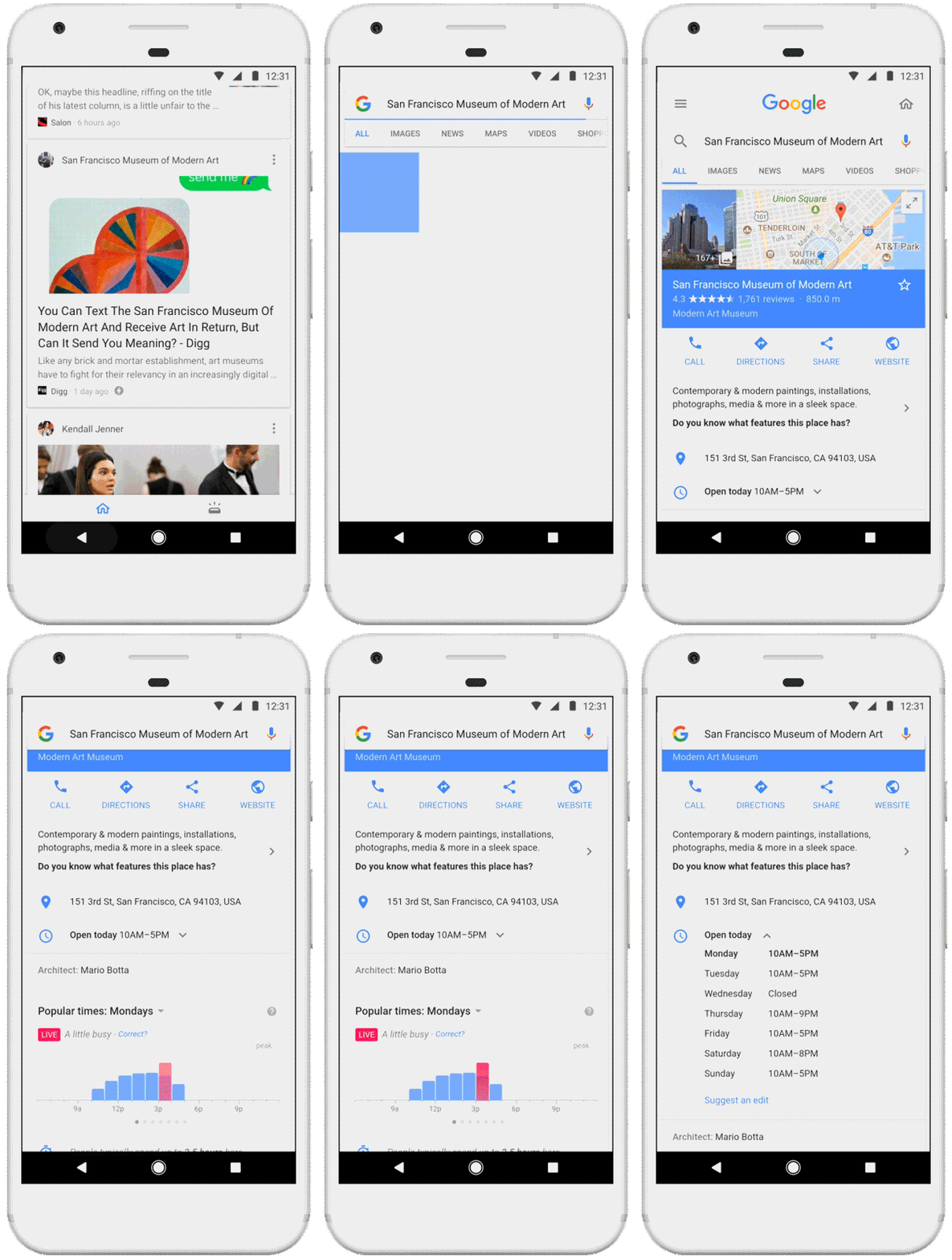
We’re also making it easier to dive deeper into any of the topics you see in your feed. At the top of every card, you’ll see a header that puts your interests front and center, letting you search that topic on Google with one tap.

Get more of the stuff you care about

With these updates to the feed, it’s easier than ever to stay in the know about exactly the things you care about and see more content to inform, inspire and entertain you. You’ll spend less time and energy trying to keep up with your interests and more time enjoying and cultivating them. Whether you’re a pet-loving, Nietzsche-reading, sports fanatic; a hip-hop head and burgeoning brewmaster; or anything in between, your feed should fit your fancy.

The new feed experience is available in the Google app for Android(including the Pixel Launcher) and iOS, launching today in the U.S. and rolling out internationally in the next couple of weeks. Just open the Google app and scroll up to get started.

We’ll leave you with some final words from Dr. Seuss: "The more that you read, the more things you will know. The more that you learn, the more places you'll go."

POSTED IN:SEARCH

Google Set To Make Major Changes to its Homepage

Google’s homepage has largely remained the same since 1996. It has been a pretty minimal webpage, with a big search bar in the center of the page. But now, it looks like Google is going to be making some radical changes to this homepage for the first time in over 20 years. The change includes adding Google’s interest and news-based feed to the home page. This has been a feature in the Google app since around 2012 when Google Now was announced and released. And now that is finally coming over to the desktop version.

Earlier this week, Google did announce that it was adding more customization to the feed, using its “advanced machine learning algorithms”. In fact, Google’s vice president of engineering, Shashi Thakur stated that “you’ll see cards with things like sports highlights, top news, engaging videos, new music, stories to read and more.” Basically stating that the feed won’t just be what is of interest to you, but also what’s trending in the user’s local area as well as around the rest of the world. Now the changes to the desktop have not been shown just yet, so it’s hard to say what Google has planned here, at least visually. But many are expecting Google to bring the Google Assistant to its homepage, although that is not yet confirmed.

Google wants to be the place where  mobile through the Android and iOS Google apps, the changes are out now in the US and will be rolling out over the next few weeks, internationally. Google hasn’t said much about the changes to desktop yet, but it wouldn’t be surprising to see it announced when it gets closer to its launch.

JioPhone by Reliance a 4G VoLTE Feature Phone: Price, Specifications, tariff And Availability

Reliance Jio 4G VoLTE feature phone was announced by the Chairman of the company Mukesh Ambani at the company’s Annual General Meeting (AGM) on 21 July 2017. The Reliance Industries Limited chairman called the new JioPhone ‘India ka smartphone’. The JioPhone is loaded with features like expandable SD card slot, 4-way navigation, 4G VoLTE support and more.
Reliance JioPhone with 4G VoLTE Specs And Features
The Reliance JioPhone with 4G VoLTE is a feature phone that comes loaded with a few features that are seen on a smartphone. It has a bar design, with a 2.4-inch QVGA display that's not touch sensitive. The phone also has an Alphanumeric keypad and a dedicated button for Torchlight. The device also comes with a 3.5mm audio-jack for plugging in your headphones. There is also a microphone a speaker and support for FM Radio. The device also comes preloaded with 22 Indic languages that it can recognise and the voice command feature on it can also be used in all those languages. You will be able to browse the internet also on the JioPhone at 4G speeds and on Jio network. The device also comes preloaded with Jio Apps on it. Made mandatory by the government, the JioPhone also comes with an SOS button. The company has also promised that the device will also come with NFC capabilities for digital payments as well as for casting content on a different screen.

Reliance JioPhone Availability
The beta phase of testing for the Reliance JioPhone will start on August 15. The device will be available for pre-booking starting from 24 August 2017 on Jio.com. The device will be made available to the consumers that have pre-booked starting from the first week of September 2017. 

JioPhone Price and Data Plans
The Reliance JioPhone is available at an effective cost of Rs 0, but users will have to pay Rs 1500 security deposit for three years. This is still cheaper than any good feature phone out there in the market as the cost of ownership is at just Rs 500/year. Jio recharge plans and sachet packs start at Rs 153 per month. It gives users unlimited data on this 4G VoLTE feature phone. The unlimited data has 0.5GB or 500 MB FUP per day. This is a total of 14GB data for a recharge period. You can also broadcast your JioTV app on your television and it really does not need to be smart. For that user will have to pay an additional recharge value of Rs 309, which is still cheaper than a DTH connection in India. The monthly plan will let users watch three to four hours of video on their television sets. Reliance Jio has two sachet packs of Rs 24 for two days and Rs 54 per week that offer same benefits.

 
Copyright © 2014 HK TECH - How to 's ; Tips , Tricks And News. Designed by OddThemes